Online 3D Stair Calculators

Build an accurate 3D model of your staircase in a few clicks. Adjust dimensions, pick materials, check the result from every angle. No installation, no signup — just open and design.

Browse Calculators

By Construction Type

By Shape

How It Works

1

Choose Your Stair Type

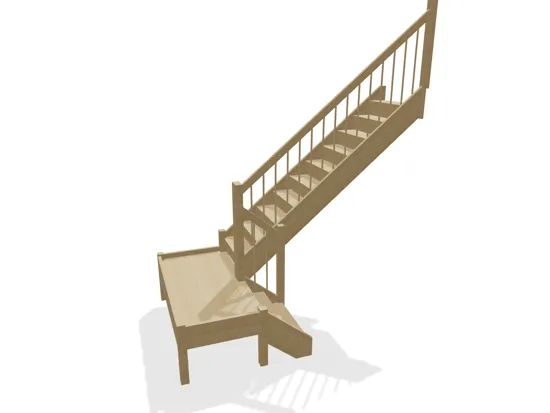
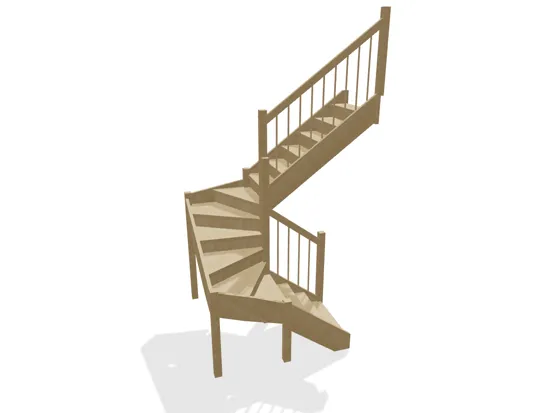
Select from 10 stair types: straight, L-shaped, U-shaped, double-turn, metal frame, or floating glass. Each with its own specialized calculator.

2

Set Dimensions

Enter your floor-to-floor height, adjust tread depth, stair width, and turn settings. The 3D model updates instantly as you change parameters.

3

Customize Materials

Choose from pine, oak, veneer, or plywood. Apply stains and enamels. Select railing types: square, cylindrical, forged, or glass panels.

4

View & Export

Rotate the 3D model, check 2D plans (top and side views), review dimensions. Export PDF blueprints and DXF files for CNC manufacturing.

What You Get

Real-Time 3D Model

See your staircase in 3D as you change parameters. Rotate, zoom, check from every angle. Works in any modern browser, no plugins.

Dimensions at a Glance

Rise height, stride length (2R+G), and key dimensions are shown in real time. You stay in control of what you're designing.

Export & Use

PDF blueprints with 2D views and DXF for CNC are coming for wooden stairs. Metal frame and floating stairs already support free GLB 3D model export — useful for interior designers and 3D artists.

Growing Library

Currently available: wood on stringers, metal frame, floating glass. Coming soon: sheet metal stringers, wood stringers (kosour), mono-stringer, and more construction types. Full stair project export is on the roadmap.

A Tool, Not a Magic Button

This project is young and actively developed. It removes the routine of stair design — you get an accurate 3D model in a few clicks. But always review what you're creating. The calculator helps, the final decisions are yours.

11 Languages

Available in English, German, French, Spanish, Portuguese, Italian, Turkish, Russian, Norwegian, Swedish, and Finnish.

Before You Start

Important Note

The calculator is a design aid, not a replacement for professional verification. Always check dimensions with a qualified professional before manufacturing. It saves you hours of routine work, but the responsibility for the final project is yours.

The Comfort Formula: 2R + G

A widely used rule of thumb: 2R + G = 600–650 mm, where R is the rise height and G is the tread depth. This helps achieve a natural stride. For residential stairs, typical rise height is 170–190 mm and tread depth is 250–300 mm. Our calculator shows both values in real time so you can judge comfort yourself.

Choosing the Right Shape

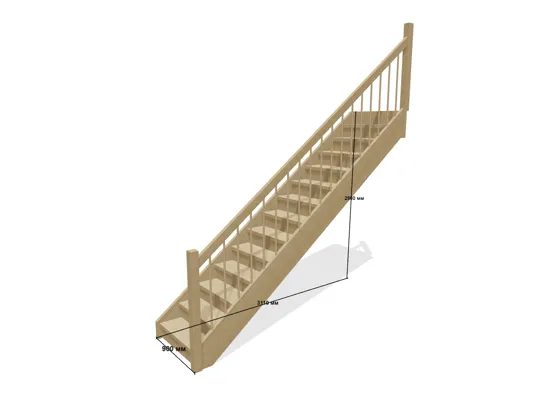
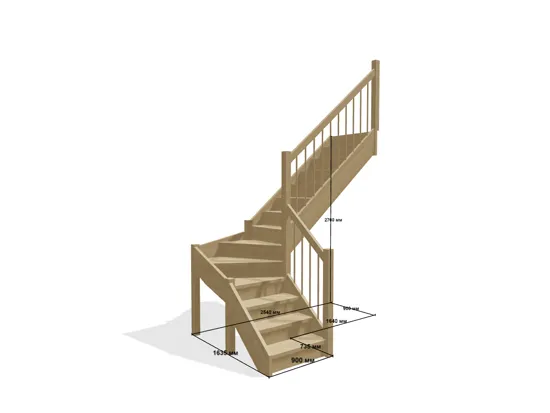
Straight staircases need the most floor space but are the simplest to build. L-shaped stairs save space by turning 90 degrees. U-shaped stairs are the most compact, folding back with a 180-degree turn. Double-turn (U-2L) staircases offer maximum layout flexibility with two independent turns.

Construction Types

Wood on stringers is the classic residential choice. Metal frame combines a steel structure with wooden treads for a modern look. Floating (cantilever) stairs are anchored directly to the wall with no visible support — the most dramatic option. More types are in development: sheet metal stringers, wood stringers (kosour), mono-stringer.
Frequently Asked Questions

Are the stair calculators really free?
Yes, the calculators are available without registration or payment. We offer 10 calculator types covering wood, metal, and floating glass staircases.
How accurate are the calculations?
The geometry is computed server-side with millimeter precision. The 3D visualization shows exact proportions and all key dimensions (rise height, stride length) are displayed in real time.
Can I export my stair design?
Yes! Export PDF blueprints with 2D views (top, left, right) and full dimensions. DXF files for CNC machines and CAD software are also available. The export includes all measurements needed for manufacturing.
What stair types are supported?
We support 10 stair types: 4 wood on stringers (straight, L-shaped, U-shaped, double turn), 3 metal frame (straight, L-shaped, U-shaped), and 3 floating glass (straight, L-shaped, U-shaped). Each type has its own specialized calculator with relevant parameters.
What is a floating (cantilever) staircase?
A floating staircase uses cantilever construction where each step is anchored directly into the wall with no visible support structure underneath. The steps appear to float in mid-air. Our floating glass calculator adds structural glass railing panels and LED lighting for a stunning visual effect. This is the most premium staircase type, popular in modern luxury homes.
How do I choose between winder steps and a landing?
Winder steps (radiating treads at the turn) save space but can be slightly less comfortable to walk on. A landing platform takes more room but provides a resting point and is easier to navigate, especially for elderly people or when carrying furniture. Our L-shaped and U-shaped calculators let you switch between both options to compare.
What materials can I choose?
For wood staircases: pine, oak, oak (clean grain), veneer, and plywood. Each material has realistic textures in the 3D view. You can apply finishes including natural (raw), walnut stain, wenge stain, dark walnut stain, Brenner walnut stain, and enamels (white, ivory, terracotta, pistachio, graphite). Two-tone configurations are supported.
What is the ideal rise height for stairs?
The generally recommended rise height for residential stairs is 170–190 mm (6.7"–7.5"). The comfort formula 2R+G should equal 600–650 mm. Our calculator shows the rise height and stride length in real time so you can judge comfort yourself.